
Edexcel History Gcse Past Papers are real examination papers made by Pearson Edexcel for GCSE History students. These papers come from previous years and include the same type of questions that appear in the real exam. Students use them as a practice tool to understand how the exam works and what kind of answers are expected.
They include different question styles such as short answers, source analysis, and long essay questions. Each question tests historical knowledge, understanding of causes and effects, and ability to explain events clearly. These papers also come with mark schemes, which show how examiners give marks for each answer.
When students practice regularly, they become familiar with exam patterns. This makes the real exam feel easier and less stressful because they already know what to expect.
Why Past Papers Are Important?
Edexcel History Gcse Past Papers are important because they help students move from theory to real exam practice. Reading notes or textbooks only gives knowledge, but exam papers teach how to apply that knowledge in real questions.
They help students understand question wording, command words, and answer expectations. Many students lose marks because they do not understand what the question is asking. Past papers solve this problem by giving repeated exposure to real exam language.
They also help students build exam confidence. When students practice again and again, they stop feeling nervous. Instead, they start feeling prepared. This mental comfort is very important for scoring good grades.
Another benefit is timing practice. Many students struggle to finish the paper on time. Practicing under timed conditions teaches them how to manage time properly during the real exam.
Understanding the Edexcel GCSE History Exam Structure
The GCSE History exam from Edexcel is divided into different papers, and each paper tests different skills. Paper 1 usually focuses on thematic studies and historic environment. This means students study long-term changes like medicine or crime. Paper 2 focuses on British depth studies and period studies, where students study specific time periods in detail. Paper 3 focuses on modern depth studies such as Germany or the Cold War.
Each paper tests different abilities like explanation, evaluation, and source interpretation. Students must not only know facts but also explain why events happened and what impact they had.
Understanding this structure helps students prepare better because they know what skills to focus on instead of just memorizing facts.
How Past Papers Improve Revision?
Edexcel History Gcse Past Papers improve revision because they turn learning into active practice. Instead of just reading notes, students answer real questions that test understanding. When students attempt questions, they quickly find out what they do not know. This helps them focus revision on weak areas instead of wasting time on topics they already understand.
These papers also improve writing skills. History exams require clear explanations and structured essays. Practice helps students learn how to build strong paragraphs with evidence and analysis. Source-based questions also become easier with practice. Students learn how to interpret sources, understand context, and explain reliability. Overall, past papers make revision more focused, practical, and effective.
Best Way to Use Past Papers
To get full benefit from Edexcel History Gcse Past Papers, students must use them correctly. Simply solving papers is not enough; they must follow a proper method.
First, students should revise the topic using notes or textbooks. Without revision, practice papers become too difficult and confusing.
Second, they should attempt the paper under timed conditions. This is important because it simulates the real exam environment. It trains the brain to think quickly and clearly under pressure.
Third, students should check their answers using the mark scheme. This helps them understand what they did right and where they lost marks.
Fourth, examiner reports should be read carefully. These reports explain common mistakes made by students across the country.
Finally, students should rewrite weak answers. This step is very important because it turns mistakes into learning opportunities. This cycle of revise, attempt, check, and improve builds strong exam preparation skills.
Common Topics Found in Past Papers
GCSE History past papers include several repeated themes and topics. These topics are part of the official Edexcel syllabus.
Common topics include Crime and Punishment, Medicine in Britain, Cold War, Weimar and Nazi Germany, American West, and Elizabethan England. These topics are designed to test different historical skills.
For example, Crime and Punishment tests change over time. Medicine in Britain tests development and progress. Cold War tests international relations and conflict. Germany topics test interpretation and source analysis. Students must study all topics because exam questions can come from any part of the syllabus.
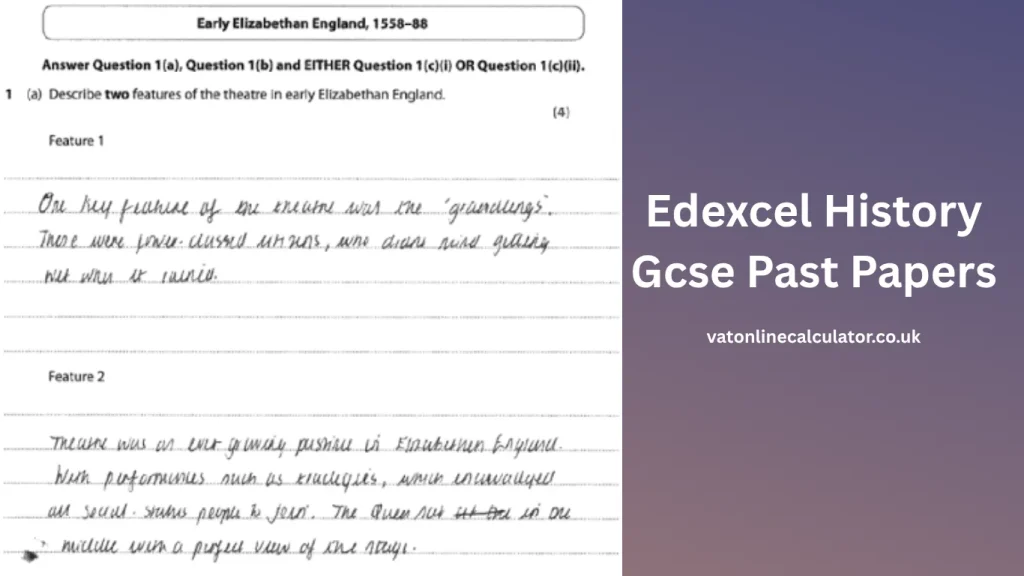
How Mark Schemes Help Students Improve?
Mark schemes are one of the most important revision tools. They show exactly how examiners award marks for each question. They explain what a full-mark answer looks like and what is missing in low-scoring answers. Students can compare their answers with the mark scheme to understand their performance.
Mark schemes also teach structure. They show how many points are needed and how explanations should be written. When students use mark schemes regularly, they start writing in a more exam-focused way, which improves their scores.
Examiner Reports and Their Importance
Examiner reports are official feedback documents written by examiners after marking exams. They explain how students performed across the country.
These reports highlight common mistakes such as weak explanations, missing evidence, or poor source analysis. They also show examples of strong answers.
Reading examiner reports helps students understand what examiners expect. It also helps them avoid repeating mistakes made by thousands of other students. This makes revision more intelligent and targeted.
Mistakes Students Make When Using Past Papers
Many students do not use past papers correctly, which reduces their effectiveness. One common mistake is looking at answers before trying the questions. This stops real learning. Another mistake is not using a timer, which leads to poor time management in exams.
Some students also focus only on certain topics and ignore others. This is dangerous because exams cover the full syllabus. The correct method is to attempt papers independently, review mistakes, and repeat practice regularly.
How Teachers Use Past Papers?
Teachers use Edexcel History Gcse Past Papers in many ways. They use them for classroom tests, homework assignments, and mock exams. Teachers also analyze student answers to identify weak areas. This allows them to give better explanations and targeted support.
Past papers help teachers prepare students for real exam conditions. They also teach students how to structure answers and use evidence properly. This guided practice improves learning speed and exam readiness.
Online Revision Support
Students can also use online resources along with past papers. These include revision videos, flashcards, quizzes, and summaries.
However, past papers remain the most important resource because they are based on real exam questions. Online tools are helpful, but they cannot replace real exam practice. The best revision method combines both theory learning and past paper practice.
How Often Should Students Practice Past Papers?
Students should use Edexcel History Gcse Past Papers regularly throughout their revision journey. It is best to complete one paper after finishing each topic.
Repeating papers is also useful because it helps students track improvement over time. Each attempt becomes better than the previous one.
A balanced revision plan includes studying content, practicing papers, reviewing mistakes, and improving weak areas. This cycle should continue until the exam date.
Time Management During Exams
Time management is very important in GCSE History exams. Students must divide time carefully between short and long questions.
Short questions should be answered quickly, while essay questions should be given more time. Students should not spend too much time on one question. A few minutes should always be left at the end for checking answers. Good time management helps students attempt every question properly and avoid losing easy marks.
Tips for Writing High-Scoring Answers
High-scoring answers always include clear structure, strong explanations, and accurate evidence. Students should always answer the exact question asked. They should avoid writing unnecessary information.
Using simple language is better than complicated writing. Examiners reward clarity and understanding. Each paragraph should include a point, explanation, and evidence. This structure helps improve marks.
Building Confidence with Practice
Confidence grows with practice. When students repeatedly use Edexcel History Gcse Past Papers, they become familiar with exam patterns.
They understand how questions are asked and how answers should be written. This reduces stress during the real exam. Confidence, combined with preparation, leads to better performance and higher grades.
Frequently Asked Questions
What are Edexcel History GCSE past papers?
They are real exam papers used for revision and practice.
Are past papers enough for revision?
No, students must also study notes and textbooks.
Do questions repeat in exams?
Exact questions do not repeat, but similar topics often appear.
Should I use mark schemes?
Yes, they show how marks are awarded.
How many papers should I practice?
As many as possible after revising each topic.
Conclusion
Edexcel History Gcse Past Papers are one of the most powerful tools for GCSE History preparation. They help students understand exam structure, improve writing skills, and build confidence. When used with mark schemes and examiner reports, they become even more effective. Regular practice helps students identify weaknesses and improve step by step. With consistent effort and smart revision, students can achieve strong results in GCSE History exams and feel fully prepared for success.