
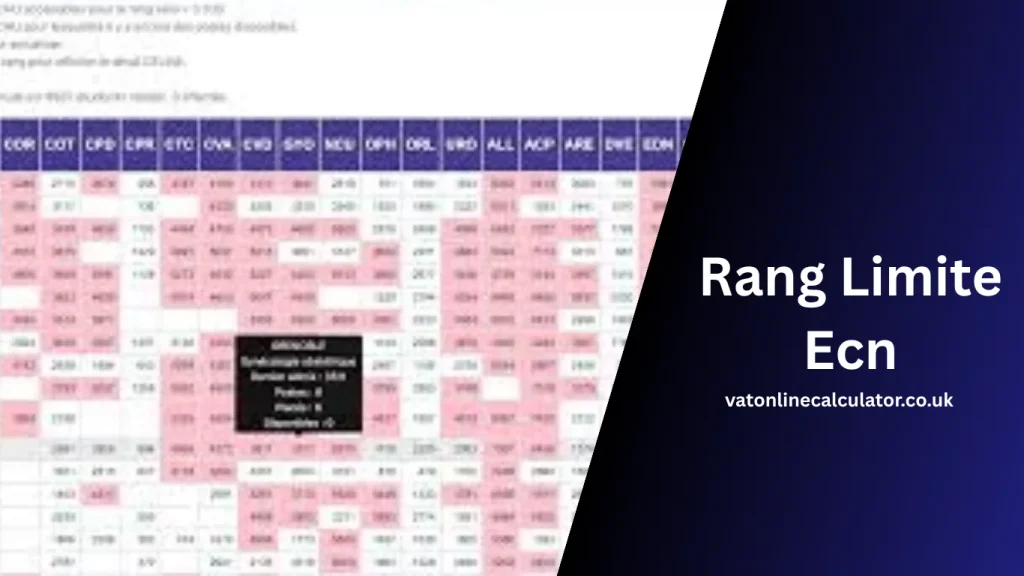
The Rang Limite Ecn is a very important concept in the French medical education system. Medical students in France must pass a national ranking exam before choosing their specialty and training hospital. The ranking position achieved in this exam decides what options are available to each student. The last rank accepted into a specialty is called the ranking limit.
In simple terms, it shows the final student who managed to enter a specific medical specialty. If a specialty closes at rank 1500, it means the last student accepted had rank 1500. Students ranked lower than that could not choose the specialty. This process makes competition very intense because every student wants the best possible rank.
Even though the ECN exam has now been replaced by EDN, many students still search for and discuss the term Rang Limite Ecn online. The term remains popular because older ranking data is still useful for understanding specialty competition in France.
Medical students study these ranking limits carefully to estimate their chances of entering a specialty. They often compare previous years before creating study goals and career plans.
Why Rang Limite Ecn Is So Important?
The Rang Limite Ecn affects almost every future decision in a medical career. It influences the specialty a student can choose and the city where they will complete their residency training. Since different specialties offer different lifestyles, salaries, and workloads, ranking becomes extremely important.
Students who achieve top national ranks gain access to highly competitive specialties such as dermatology, plastic surgery, ophthalmology, and radiology. These specialties often attract students because they provide strong salaries and balanced work schedules.
Students with lower ranks still become doctors, but they may have fewer specialty choices. However, this does not mean they cannot build successful careers. Many respected doctors entered specialties that were less competitive during their training years.
Medical students often experience pressure because they know one exam can influence many years of their professional future. This is why preparation for the national ranking exam becomes one of the biggest challenges in French medical education.
Understanding the ECN and EDN System
The ECN exam was previously called Épreuves Classantes Nationales. It was a national examination taken by all French medical students. The government later replaced it with EDN, known as Épreuves Dématérialisées Nationales. Although the structure changed, the ranking process still exists.
The purpose of these exams is to rank students nationally. Students then select specialties and hospitals based on their position. Students with better scores choose first, while lower-ranked students must select from the remaining available positions.
This system creates fairness because all students compete under the same national process. Every specialty has a limited number of training positions. Once all positions are filled, the specialty closes.
The following table explains the process clearly:
| Step | Description |
| National Exam | Students complete the medical ranking exam |
| Ranking Publication | Students receive a national rank |
| Specialty Selection | Higher-ranked students choose first |
| Hospital Allocation | Students select residency locations |
| Final Cutoff | Last accepted rank becomes the limit |
The final accepted rank creates the yearly Rang Limite Ecn for that specialty.
Difference Between ECN and EDN
Many students still confuse ECN and EDN. The older ECN system focused heavily on written knowledge exams. The newer EDN format uses digital testing and practical evaluation methods.
Even though the exam changed, the ranking system remains central to medical specialty selection in France.
Here is a simple comparison:
| Feature | ECN | EDN |
| Exam Type | Written | Digital |
| Main Focus | Theoretical knowledge | Competency and clinical reasoning |
| Ranking System | National ranking | National ranking |
| Specialty Access | Based on rank | Based on rank |
| Current Status | Replaced | Active |
Students continue searching for Rang Limite Ecn because older statistics still help estimate specialty competition levels.
Most Competitive Medical Specialties in France
Certain medical specialties attract stronger competition every year. These specialties usually offer excellent salaries, modern work environments, and better work-life balance. Because many students want them, the ranking limits remain very low.
Plastic surgery is often one of the most difficult specialties to enter. Dermatology and ophthalmology are also extremely competitive because they provide regular schedules and high patient demand.
Radiology attracts students because technology continues improving the field rapidly. Cardiology remains popular because of its importance in healthcare and advanced procedures.
The following table shows estimated rank ranges:
| Specialty | Estimated Rank Limit |
| Plastic Surgery | 800–1200 |
| Ophthalmology | 1000–1400 |
| Dermatology | 1200–1500 |
| Radiology | 1500–2000 |
| Cardiology | 2500–3500 |
| Pediatrics | 4000–6000 |
| General Medicine | Higher ranks accepted |
These numbers change every year depending on student preferences and available positions.
Why Some Specialties Are More Popular?
Several reasons explain why some specialties become highly competitive. Lifestyle is one of the biggest factors. Students increasingly value specialties with predictable working hours and fewer emergencies.
Dermatology is a good example because it usually offers balanced schedules and fewer night shifts. Ophthalmology also attracts students because it combines surgery with stable working conditions. Salary expectations influence student choices as well. Some specialties offer stronger earning potential than others. Radiology and surgical fields often become attractive for this reason.
Prestige also affects popularity. Many students dream about entering famous specialties because they are respected within the medical community. Hospital technology and research opportunities influence decisions too. Students interested in innovation often prefer advanced specialties linked with modern equipment and scientific research.
How Students Prepare for National Medical Exams?
Preparation for ECN and EDN requires years of discipline and consistent effort. Medical students often spend long hours studying theoretical concepts, clinical cases, and treatment strategies.
Most students follow structured revision schedules during the final years of medical school. Many also attend private coaching institutes to improve their preparation. These coaching centers provide practice exams, study materials, and ranking simulations.
Students commonly use:
- Clinical case training
- Mock examinations
- Group study sessions
- Digital revision platforms
- Past exam papers
Students aiming for competitive specialties closely monitor Rang Limite Ecn trends to understand how much improvement they need. Daily revision becomes essential because the medical curriculum is extremely large. Students must balance hospital training with academic preparation.
Best Strategies to Achieve a Better Rank
Improving national ranking requires both intelligence and consistency. Students who perform well usually develop strong study habits early. One effective strategy is creating a realistic study timetable. Organized schedules help students cover all subjects gradually without panic. Time management is very important during medical preparation.
Mock exams are another powerful tool. They help students practice under exam conditions and improve confidence. Students also learn how to manage stress and answer questions more efficiently. Focusing on weak subjects is equally important. Many students avoid difficult topics, but balanced preparation usually produces stronger overall results.
Maintaining good physical and mental health also improves academic performance. Sleep, exercise, and healthy eating habits directly affect concentration and memory.
Psychological Pressure During Preparation
Medical students often experience intense emotional pressure during exam preparation. Competition creates fear of failure because rankings influence future careers.
Many students suffer from:
- Anxiety
- Burnout
- Sleep problems
- Isolation
- Mental exhaustion
Long study hours can become mentally draining. Students sometimes compare themselves constantly with classmates, which increases stress further.
Healthy routines are essential during this period. Taking regular breaks improves concentration and reduces emotional fatigue. Family support and friendships also help students manage stress more effectively. Medical schools increasingly recognize the importance of student mental health. Some universities now offer counseling services and psychological support programs.
Role of Coaching Institutes
Private coaching centers have become very popular among French medical students. These institutes provide organized revision systems and expert guidance.
Coaching centers often offer:
- Weekly mock exams
- Detailed ranking analysis
- Personalized mentoring
- Clinical workshops
- Revision summaries
Many students feel coaching helps them remain motivated and disciplined. However, coaching alone cannot guarantee success. Personal effort remains the most important factor in achieving strong results. Some students succeed without expensive preparation programs by using free resources and consistent self-study methods.
Popular Residency Cities in France
City selection is another important part of the ranking process. Large cities attract more students because they provide stronger hospital systems and research opportunities. Paris remains the most desired city because of its prestigious hospitals and advanced medical research centers. Lyon and Marseille also attract large numbers of students each year.
Students often prefer cities with:
- Strong teaching hospitals
- Better career networking
- Research opportunities
- Modern healthcare systems
- Comfortable lifestyles
Popular cities usually close quickly during specialty selection because competition is stronger.
Common Misunderstandings About Rang Limits
Many students misunderstand how ranking systems work. One major misconception is that ranking limits remain stable every year. In reality, they change constantly according to student preferences and available positions.
Another misunderstanding is that lower-ranked students cannot become successful doctors. This idea is incorrect. Career success depends more on skill, dedication, and patient care than specialty prestige alone.
Some students also believe highly competitive specialties automatically provide better careers. However, work-life balance and personal satisfaction vary greatly between individuals.
Students should focus on choosing specialties that match their interests and long-term goals rather than following trends blindly.
Future of Medical Ranking in France
The French medical education system continues evolving. Digital testing and competency-based evaluation are becoming more common. Future reforms may place greater emphasis on clinical reasoning, communication skills, and practical training.
Technology will likely continue improving exam systems and learning methods. Online platforms, simulation tools, and artificial intelligence may play larger roles in future medical education. Despite these changes, competition for top specialties will probably remain strong. Students will continue analyzing Rang Limite Ecn data to understand yearly specialty trends.
Importance of Choosing the Right Specialty
Choosing a medical specialty is one of the biggest decisions in a doctor’s life. Every field offers different responsibilities, schedules, and patient experiences.
Some students enjoy surgery because they like practical procedures and emergency work. Others prefer internal medicine because they enjoy long-term patient relationships and diagnosis. Lifestyle should also be considered carefully. Some specialties require frequent night shifts and emergency duties, while others provide more predictable schedules.
Students should ask themselves important questions before choosing:
- What kind of patients do I want to treat?
- Do I enjoy emergency situations?
- Do I prefer surgery or consultation?
- What lifestyle do I want in the future?
A fulfilling medical career depends on personal satisfaction, passion, and long-term motivation.
Frequently Asked Questions
What does Rang Limite Ecn mean?
It refers to the final rank accepted into a medical specialty after the national medical ranking exam.
Is ECN still used in France?
No. France replaced ECN with EDN, but many students still use the older term online.
Which specialties are the most competitive?
Plastic surgery, dermatology, ophthalmology, and radiology are usually among the most competitive specialties.
Does ranking change every year?
Yes. Ranking limits change depending on student demand and available training positions.
Can lower-ranked students still become successful doctors?
Absolutely. Many successful doctors entered less competitive specialties and built excellent careers.
Conclusion
The Rang Limite Ecn remains one of the most important topics in French medical education. It determines specialty access, residency location, and many future career opportunities. Every year, medical students compete intensely to achieve better rankings and secure their desired specialties.
Understanding the ranking system helps students prepare more effectively and make smarter career decisions. Although competitive specialties attract major attention, every field of medicine offers meaningful opportunities to help patients and contribute to healthcare.
Students should focus on balanced preparation, strong mental health, and long-term professional satisfaction. A high rank can open many doors, but true success in medicine comes from dedication, compassion, and continuous learning throughout a doctor’s career.
Also Read Napoli By The Lake Food and Views