
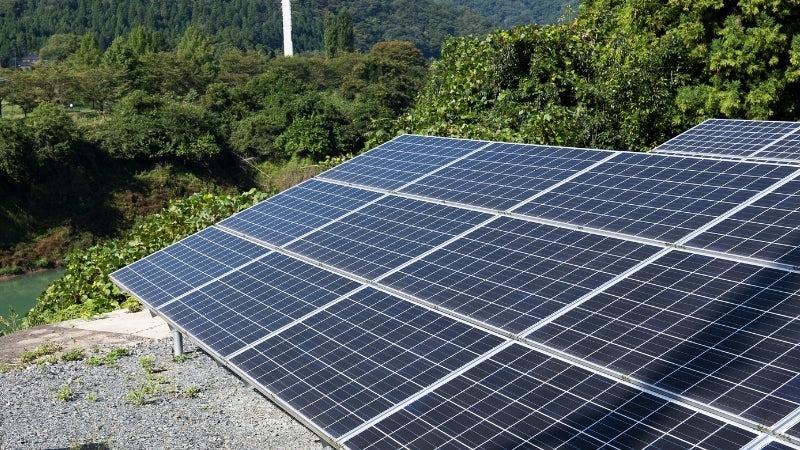
According to the International Renewable Energy Agency (IRENA), global off-grid solar capacity will exceed 11 GW in 2024, powering millions of homes, farms, and remote facilities worldwide. However, a persistent problem continues to plague users: low battery charging rates in off-grid solar systems. Battery charging is at the heart of any solar off grid system. When your system fails to charge efficiently, it not only disrupts power but also shortens the lifespan of expensive components like solar panels, charge controllers, and inverters. For system owners, this means higher maintenance costs and a lower return on investment.
The Role of Batteries in solar off grid system
In every solar off grid system, batteries act as energy storage, storing daytime electricity generated by solar panels for use at night or on cloudy days. The overall efficiency of the system depends on how efficiently energy flows from the solar panels, through the charge controller, and into the battery bank.
Typically, an off grid solar system consists of solar panels that capture sunlight and generate direct current, a charge controller (PWM or MPPT) that regulates voltage and current, and a battery bank for energy storage. An inverter converts direct current (DC) electricity to alternating current (AC) for domestic or industrial use.
A low battery charge rate occurs when one or more components in this chain fail to operate within their design specifications. Common symptoms include excessive battery charging times, frequent inverter low-voltage alarms, or reduced daily operating time.
Common Causes of Low Battery Charge Rates in solar off grid system
A variety of technical and environmental factors can contribute to inefficient charging in off grid solar systems. Identifying these causes can help users implement the correct solutions and restore optimal system performance.
a. Inadequate Solar Panel Output
Dirty, shading, or incorrectly oriented solar panels can significantly reduce power output. Even partial shading of a single solar panel can cause the array’s production to drop by as much as 25% to 30%.
b. Undersized Solar Cells
If the capacity of the solar array is insufficient to meet energy demands, the batteries will never fully charge. This problem often arises when users expand their electrical loads without upgrading their solar arrays.
c. Inefficient Charge Controller
Older or poor-quality PWM controllers waste potential energy, especially under conditions of high light variation. Upgrading to an MPPT charge controller can improve charging efficiency by 20% to 30%.
d. Improper System Voltage Configuration
A voltage mismatch between the solar panels, controller, and battery can lead to energy loss and incomplete charging cycles.
e. Extreme Temperatures
Battery efficiency decreases in both hot and cold temperatures. For example, lead-acid batteries can lose up to 20% of their capacity in cold environments.
f. Battery Aging or Damage
Over time, the battery panels in an off-grid solar system age, increasing their internal resistance and decreasing their charge acceptance. Old or unbalanced cells often charge slowly or unevenly, reducing overall system performance. In many cases, a combination of these factors can cause a low charge rate. Therefore, a holistic diagnostic approach is crucial when troubleshooting an off-grid solar system.
Evaluating Solar Panels in a solar off grid system
The solar array is the heart of any off grid solar system, responsible for delivering all the energy stored in the batteries. The first step in troubleshooting is to confirm that the solar panels are performing at their rated output.
Step 1: Measure the solar voltage and current. Using a multimeter, compare the measured open-circuit voltage (Voc) and short-circuit current (Isc) to the manufacturer’s specifications. A significant voltage drop indicates dirt buildup, aging, or micro-cracks on the solar panel.
Step 2: Check shading and orientation. Even minimal shading can result in a disproportionate loss of performance. The solar panel should face due south (in the Northern Hemisphere) or due north (in the Southern Hemisphere), tilted at an angle appropriate to the local latitude for optimal sunlight exposure.
Step 3: Check wiring and connections. Loose, corroded, or undersized wires can cause voltage drops and affect proper charging. Ensure all connectors are weather-sealed and rated for outdoor use.
Step 4: Clean the panel. Regular cleaning can restore up to 15% of lost efficiency. Dust, bird droppings, and contaminant residue can hinder sunlight absorption.
Check the charge controller in your off grid solar system
In a solar off grid system, the charge controller serves as the intelligent intermediary between the solar panels and the battery. A faulty or improperly configured charge controller can severely limit the battery’s charging capacity. First, confirm the controller type and settings. If you’re using your system in an area with significant fluctuations in sunlight, ensure your system uses an MPPT charge controller. Verify that the voltage setting matches your battery type (lead-acid, AGM, GEL, or lithium).
Also, check for overheating or corrosion. Excessive heat or moisture intrusion can damage the controller’s internal circuitry. Controllers installed in poorly ventilated cabinets are more susceptible to thermal stress, which reduces efficiency. Next, check the input and output readings. Modern controllers display real-time voltage, current, and power data. Compare these readings to expected values. If the controller output is significantly lower than the solar array input, recalibration or replacement may be necessary. For digital MPPT controllers, ensure the firmware is up to date and fully compatible with your battery management system.
Diagnose Battery Bank Performance
Batteries are the most expensive and sensitive component in a solar off grid system and are often the root cause of low charge rates. Check the battery’s age and condition. All batteries degrade over time. Lead-acid batteries typically last 3-5 years, while lithium-ion batteries can last over 10 years if properly maintained. Uneven cell aging can cause individual cell performance degradation, impacting the performance of the entire battery pack. To check each cell, measure voltage and specific gravity using a voltmeter or hydrometer (for flooded lead-acid batteries). A battery with significantly lower voltage or specific gravity readings indicates sulfation or increased internal resistance.
Also, balance and equalize the batteries. Regular equalization charging helps balance the batteries and prevent capacity loss. However, equalization charging must be performed within the manufacturer’s recommended conditions to avoid overcharging. Also, consider temperature and humidity factors and install the batteries in an environment with consistent conditions. For every 10°C increase in temperature above 25°C (77°F), the lifespan of a lead-acid battery is halved. Monitoring battery performance helps ensure stable operation and efficient energy storage in your off-grid solar system.
Maximize Battery Performance for Long-Term Energy Independence
Even the most advanced off grid solar system can be crippled by low battery charge rates, reducing efficiency and user satisfaction. However, through systematic diagnostics that examine the solar panels, charge controller, batteries, and wiring, most issues can be identified and resolved. As a professional off-grid solar system manufacturer, we emphasize the importance of high-quality components, reasonable configuration, and routine maintenance.