
A garage door is one of the largest moving parts in most homes. It opens and closes several times a day and plays an important role in home security and convenience. The smooth movement of the door depends heavily on a spring system that supports its weight. When the spring stops working properly, the entire door system can fail. Many homeowners begin searching for Garage Door Torsion Spring Replacement when their garage door suddenly becomes heavy or refuses to open.
A garage door can weigh between 130 and 300 pounds depending on its material and size. The spring system helps lift that weight so the door can move easily. Without a properly working spring, even an automatic garage door opener cannot lift the door effectively. This is why spring problems are among the most common garage door issues.
Understanding how torsion springs work helps homeowners recognize early warning signs and avoid serious problems. Learning about the repair process also helps homeowners make informed decisions about maintenance and professional services. This guide explains how the torsion spring system works, why springs break, and what to expect during the replacement process.
What Is a Garage Door Torsion Spring?
A torsion spring is a strong metal coil installed above the garage door opening. It is designed to store mechanical energy when the door closes. When the door opens, the spring releases that stored energy and helps lift the door smoothly.
This spring system works together with other important components such as the shaft, cable drums, and lift cables. These parts work as a balanced system that supports the heavy weight of the door. When one part fails, the entire system may stop working correctly.
Many homeowners learn about Garage Door Torsion Spring Replacement when their door stops operating normally. The spring may break due to wear and tear or lose tension over time. When this happens, the door may feel extremely heavy or fail to open completely.
Torsion springs are stronger and more durable than extension springs. Because of this design, they provide smoother and safer door operation. However, they still wear out eventually after thousands of opening and closing cycles.
How a Torsion Spring System Works?
The torsion spring system works by storing energy when the garage door closes. As the door moves downward, the spring tightens and builds tension. This tension is stored inside the metal coils.
When the garage door opens, the spring slowly releases that stored tension. The spring turns the shaft attached to it, which rotates the cable drums. The drums pull the lift cables that raise the garage door upward.
This design balances the heavy weight of the garage door. Because of this balance, the door can open smoothly with minimal effort. It also reduces stress on the garage door opener motor.
Without a working torsion spring, the opener would struggle to lift the door. The motor could even burn out if it tries to lift the full weight repeatedly. That is why the spring system is considered one of the most important parts of a garage door.
Garage Door Spring System Components
| Component | Function |
| Torsion Spring | Stores mechanical energy used to lift the door |
| Shaft | Transfers the rotational force of the spring |
| Cable Drums | Guide the lift cables during movement |
| Lift Cables | Pull the garage door upward |
| Center Bracket | Holds the torsion spring assembly in place |
Each of these components works together to keep the door balanced and operating smoothly.
Signs Your Torsion Spring Needs Replacement
Garage door torsion springs rarely break without warning. In most cases, homeowners notice several signs before the spring fails completely. Recognizing these signs early can prevent larger repair problems.
One of the most common warning signs is a loud bang coming from the garage. This sound often occurs when the spring snaps suddenly under tension. Many homeowners initially think something fell inside the garage, but the sound usually comes from the broken spring.
Another sign is a garage door that feels unusually heavy. If the spring loses tension, it can no longer support the door’s weight. The door may also open unevenly or move slower than usual.
Sometimes the garage door opener struggles to lift the door. This happens because the opener motor depends on the spring to help carry the weight. If the spring fails, the opener works much harder than it should.
When these signs appear, homeowners may need Garage Door Torsion Spring Replacement to restore proper door operation.
Common Warning Signs
| Symptom | Possible Cause |
| Loud bang in garage | Spring suddenly snapped |
| Door feels very heavy | Spring lost tension |
| Door opens unevenly | One spring may be broken |
| Opener struggles | Spring not supporting door weight |
| Visible gap in spring | Spring has broken |
If homeowners notice any of these symptoms, they should inspect the spring system carefully or contact a technician.
Why Torsion Springs Break?
Torsion springs are strong, but they do not last forever. Over time, metal fatigue weakens the coils and causes the spring to break. This process happens naturally after thousands of door cycles.
Most standard torsion springs are designed for about ten thousand cycles. A cycle refers to one full opening and closing of the garage door. If the door is used four times a day, the spring may last seven to ten years.
Several environmental factors can also shorten the life of the spring. Rust is one of the most common causes of early spring failure. Rust increases friction between the coils and weakens the metal over time.
Lack of lubrication can also increase wear. Without lubrication, the coils rub against each other and create friction that damages the spring. Temperature changes may also affect the metal and contribute to fatigue.
Factors That Cause Spring Failure
| Cause | Effect |
| Rust buildup | Weakens metal coils |
| Poor lubrication | Increases friction |
| Frequent door use | Shortens spring lifespan |
| Temperature changes | Causes metal expansion |
| Wrong spring size | Adds stress to system |
Regular inspection and maintenance can reduce many of these issues.
Is Torsion Spring Replacement Dangerous?
Garage door torsion springs hold a large amount of stored tension. If the spring suddenly releases that tension, it can cause serious injury. This is why many experts recommend professional repair services.
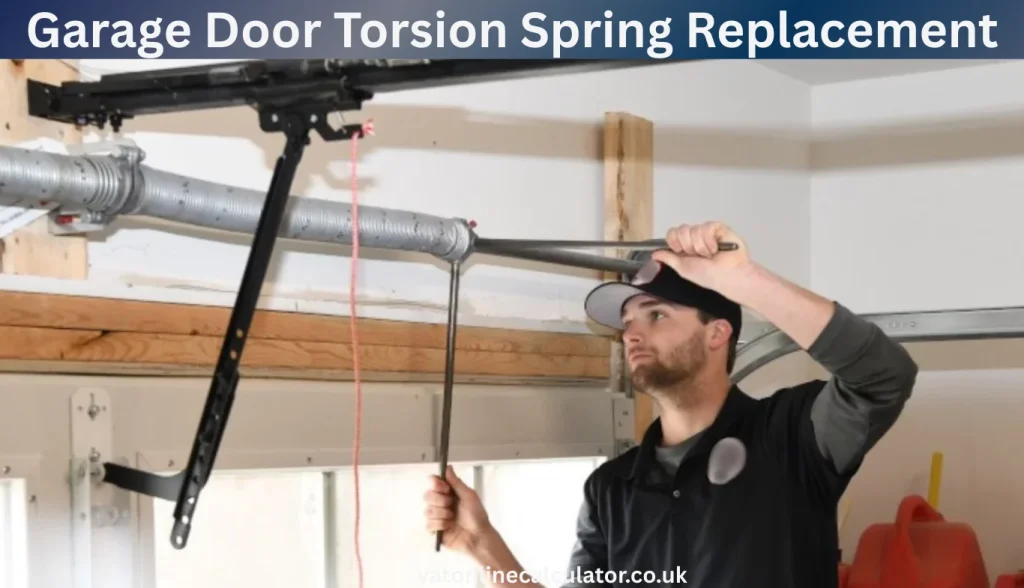
During Garage Door Torsion Spring Replacement, technicians must carefully release the tension stored in the spring. This process requires special tools and proper training. Without the correct tools, the spring can spin uncontrollably.
Professional technicians use winding bars to control the tension safely. These bars allow them to unwind the spring slowly and remove it from the shaft. They then install a new spring and wind it to the correct tension level.
Because of the risk involved, homeowners should avoid attempting this repair without proper experience. Safety should always be the highest priority when dealing with garage door springs.
Tools Used in Torsion Spring Replacement
Professional technicians rely on specialized tools to complete this repair safely. These tools allow them to control the spring tension and perform precise adjustments.
Using the correct tools ensures that the door remains balanced after installation. It also prevents damage to other components of the garage door system.
Common Tools Used
| Tool | Purpose |
| Winding bars | Safely wind and unwind torsion springs |
| Socket wrench | Remove and tighten bolts |
| Locking pliers | Hold door in place |
| Ladder | Access spring assembly |
| Safety gloves | Protect hands |
These tools make the replacement process safer and more efficient.
Step-by-Step Process of Torsion Spring Replacement
Professional technicians follow a specific procedure to replace torsion springs safely. First, they disconnect the garage door opener to prevent accidental movement. They also secure the door using clamps or locking pliers. Next, the technician releases the tension stored in the broken spring. They insert winding bars into the winding cone and slowly unwind the spring. This step requires careful control to prevent sudden movement.
After the spring is completely unwound, the technician removes it from the shaft. A new spring is then installed in its place. The technician winds the new spring to the correct tension level and secures it with set screws. Finally, the door is tested to ensure it opens and closes smoothly. Many homeowners research Garage Door Torsion Spring Replacement to better understand this repair process.
Cost of Garage Door Torsion Spring Replacement
The cost of spring replacement can vary depending on several factors. These factors include the type of spring, the size of the garage door, and local labor rates.
Most homeowners pay between $150 and $400 for professional replacement. Higher quality springs designed for longer lifespans may cost slightly more.
Average Replacement Costs
| Service Type | Estimated Cost |
| Single spring replacement | $150 – $250 |
| Double spring replacement | $200 – $400 |
| High cycle spring upgrade | $250 – $500 |
| Emergency repair | $300 – $600 |
Technicians often recommend replacing both springs if the door uses two. This prevents future repairs when the second spring fails.
How Long Do Torsion Springs Last?
The lifespan of torsion springs depends on usage and maintenance. Most springs last between seven and ten years under normal conditions. Homes that use the garage door frequently may experience faster wear.
High cycle springs are designed to last longer than standard springs. These springs can handle twenty thousand cycles or more. Although they cost more initially, they often save money over time.
Proper maintenance also extends spring life. Lubrication reduces friction between the coils and protects the metal from rust. Regular inspections help identify early signs of wear. Many homeowners start researching Garage Door Torsion Spring Replacement when their springs reach this age range.
Maintenance Tips to Extend Spring Life
Routine maintenance helps keep the garage door system working efficiently. Homeowners should inspect the springs at least twice each year. They should look for rust, gaps, or signs of wear.
Applying a garage door lubricant every six months helps reduce friction. This also prevents rust from forming on the metal coils. Keeping the tracks clean and tightening loose hardware also improves system performance. Simple maintenance steps can prevent sudden spring failure and extend the life of the entire door system.
DIY vs Professional Replacement
Some homeowners consider replacing torsion springs themselves. While this may appear to save money, the repair involves significant safety risks.
Professional technicians have the training and experience required for this job. They also use specialized tools to control the spring tension safely. This ensures the door remains balanced after installation.
DIY repairs can lead to injuries or damage to the garage door system. In many cases, hiring a professional is the safest and most reliable option.
Comparison Table
| Option | Advantages | Risks |
| DIY Replacement | Lower cost | High safety risk |
| Professional Service | Safe and reliable repair | Higher cost |
Most homeowners choose professional service to avoid potential accidents.
Frequently Asked Questions
How do I know if my torsion spring is broken?
A loud bang in the garage often signals that the spring has snapped. The garage door may also feel extremely heavy or fail to open.
Can I open the garage door if the spring is broken?
It may be possible to open the door manually, but it will be very heavy. Doing so may damage the opener or cause injury.
How long does the replacement process take?
A professional technician usually completes the repair in about thirty to sixty minutes.
Should both springs be replaced at the same time?
Yes, replacing both springs is often recommended. When one breaks, the other is usually close to failure.
What happens if I ignore a broken spring?
Ignoring the problem can damage cables, rollers, and the opener motor. It can also create serious safety risks.
Conclusion
Garage door torsion springs play a vital role in lifting and balancing the garage door. When these springs fail, the entire door system can stop functioning properly. Understanding Garage Door Torsion Spring Replacement helps homeowners recognize warning signs and respond quickly to repair needs.
Regular maintenance, lubrication, and inspection can extend the life of the spring system. However, all springs eventually wear out due to normal use and metal fatigue. Professional technicians ensure safe repairs by installing the correct spring type and adjusting the tension properly.
A well maintained garage door improves home security, convenience, and safety. By taking care of the spring system, homeowners can keep their garage doors working smoothly for many years.
Also, Read Jehovah Shammah Meaning: Understanding “The Lord Is There”