
Elastic energy is something we experience every day, even if we do not notice it. It exists in many objects around us that can stretch or compress and then return to their original shape. In this detailed guide, we will explore Elastic Potential Energy Examples in a simple and clear way so that even a young student can understand the concept easily.
What is Elastic Potential Energy?
Elastic potential energy is the energy stored in an object when it is stretched or compressed. This energy remains stored until the object returns to its original shape. When the object is released, the stored energy converts into motion or another form of energy.
This concept is very important in physics because it helps explain how many everyday objects work. From small items like rubber bands to large systems like bridges, this type of energy plays a key role in daily life.
How Elastic Potential Energy Works?
When a force is applied to an elastic object, such as pulling a rubber band or pressing a spring, the object changes its shape. During this change, energy is stored inside the object. When the force is removed, the object tries to return to its original form, releasing the stored energy.
The amount of stored energy depends on how much the object is stretched or compressed. It also depends on the material of the object and its stiffness. This explains why different materials store different amounts of energy under the same conditions.
Formula of Elastic Potential Energy
The formula used to calculate this energy helps scientists and engineers understand and measure it in real situations.
U = \frac{1}{2}kx^2
In this formula, “k” represents the stiffness of the object, and “x” represents how far the object is stretched or compressed. A higher value of “k” means the object is harder to stretch, and more energy is stored. This formula is widely used in physics and engineering to design systems that use elastic energy.
Everyday Elastic Potential Energy Examples
There are many examples of elastic energy in our daily lives, and they are easy to observe. One of the simplest Elastic Potential Energy Examples is a rubber band. When you stretch it, it stores energy, and when you release it, it quickly returns to its original shape. This shows how stored energy turns into motion.
Another common example is a spring inside a toy. When you press or compress the spring, it stores energy. When released, the spring pushes back and creates movement. This principle is used in many toys and mechanical devices.
A bow and arrow also provide a clear example. When the bowstring is pulled back, the bow bends and stores energy. When the string is released, the stored energy moves the arrow forward at high speed. This is one of the oldest uses of elastic energy in human history.
A trampoline works using the same principle. When a person jumps on it, the surface stretches and stores energy. When it returns to its normal shape, it pushes the person upward. This makes jumping fun and shows how energy is transferred.
Bungee jumping is another powerful example. As the jumper falls, the cord stretches and stores energy. After reaching a certain point, the cord pulls the jumper back up. This is a large-scale application of elastic energy in action.
Elastic Potential Energy in Daily Life
Elastic energy is not only used in toys and sports, but it is also very important in daily life and modern technology. Vehicles use springs in their suspension systems to absorb shocks from the road. This helps provide a smooth and comfortable ride.
Doors often use springs to close automatically after opening. This shows how stored energy can be used to perform useful work without constant effort. Even simple items like pens use small springs to function properly.
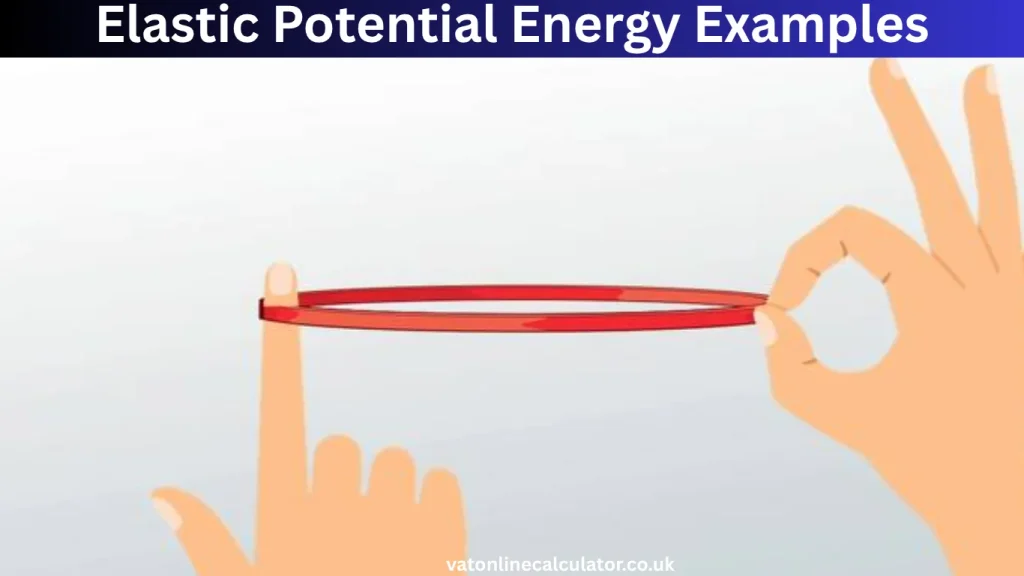
Table: Common Objects and Their Elastic Energy Use
| Object | Action | Energy Stored When | Energy Released When |
| Rubber Band | Stretching | Pulled apart | Let go |
| Spring Toy | Compressing | Pressed down | Released |
| Bow | Bending | Drawn back | Arrow released |
| Trampoline | Jumping | Pressed downward | Pushes upward |
| Bungee Cord | Stretching | Falling downward | Pulls back upward |
This table clearly explains different Elastic Potential Energy Examples and helps you understand how energy is stored and released in each case.
Why Elastic Potential Energy is Important?
Elastic energy plays a very important role in science and engineering. It helps machines operate efficiently and safely. Without it, many systems would not function properly.
It also helps us understand energy transformation. Stored energy can change into motion, heat, or sound depending on the situation. This makes it a key concept in physics and real-world applications.
Key Factors That Affect Elastic Energy
Several factors affect how much energy an object can store. The stiffness of the object is very important because stronger materials store more energy. The amount of stretch or compression also affects the energy stored.
The type of material plays a major role as well. Some materials are more elastic and can store more energy without breaking. Understanding these factors helps engineers design better tools and machines.
Real-Life Applications
Elastic energy is widely used in different fields and industries. In medical equipment, elastic materials are used in braces and support tools. These materials help in movement and recovery.
In engineering, buildings and bridges use elastic materials to handle stress and avoid damage. This is especially important during earthquakes or strong winds.
In sports, equipment like rackets, balls, and shoes use elastic energy to improve performance. This allows players to move faster and perform better.
Understanding Through Simple Observation
You can easily observe this concept at home. Take a rubber band and stretch it gently. When you release it, it quickly returns to its shape. This simple activity explains many Elastic Potential Energy Examples in a practical way.
You can also try pressing a spring and watching how it reacts. These simple experiments help you understand the concept better without needing complex tools.
Differences Between Elastic and Other Energy Types
Elastic potential energy is different from other forms of energy. For example, gravitational potential energy depends on the height of an object. Elastic energy depends on how much the object changes shape.
Kinetic energy, on the other hand, is the energy of motion. Elastic energy becomes kinetic energy when the object starts moving after being released. Understanding these differences helps in learning physics concepts more clearly.
Common Mistakes Students Make
Many students often confuse elastic energy with kinetic energy. They may think that energy is only present when an object is moving. However, elastic energy is stored energy that exists even when the object is not moving.
Another common mistake is ignoring the role of material. Not all objects can store the same amount of energy. Understanding these ideas helps students avoid confusion and learn more effectively.
Frequently Asked Questions
What is elastic potential energy in simple words?
It is the energy stored in an object when it is stretched or compressed, and it is released when the object returns to its original shape.
What are some common examples?
Rubber bands, springs, trampolines, and bows are common examples that store and release energy.
Why is elastic energy important?
It helps machines work properly and allows objects to return to their original shape after being stretched or compressed.
Can elastic energy turn into other forms?
Yes, it often turns into kinetic energy when the object starts moving after being released.
Is elastic energy used in daily life?
Yes, it is used in vehicles, sports equipment, tools, and many other systems around us.
Conclusion
Elastic energy is an important part of our everyday life, and it helps objects store and release energy efficiently. By understanding Elastic Potential Energy Examples, we can better understand how energy works around us. This knowledge not only improves our understanding of science but also helps in developing new technologies and improving existing systems.
Also, Read Ford Explorer Lease Deals Simplified