
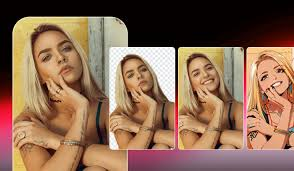
With mobile phone photography becoming a daily habit, images are no longer just for recording moments, but have become a medium for expression, branding, and aesthetics. Meitu XiuXiu is more than just a “photo editing app”; it’s like a toolbox: it can solve the urgent need for detail repair, and also support a systematic workflow from style setting to batch output. Below, we’ll break down its functions, techniques, and application scenarios from a practical perspective to help you turn every shot into a reusable visual asset.
Why is Meitu Xiu Xiu used as a creative platform rather than an emergency photo editing tool?
Most users view photo editing as a post-processing fix: poor lighting or numerous imperfections are addressed. However, viewing Meitu Xiu Xiu (美图秀秀) as a creative platform yields a different result—it provides support before, during, and after shooting: shooting guidance, real-time filter previews, post-processing stylization, template-based output, and batch management. In the long run, this streamlined usage fosters a unified visual style, which is particularly important for personal branding and content creation.
The shift in mindset from “repairing one at a time” to “repairing a batch”
Personal accounts or small e-commerce businesses often require a large number of images. Mastering functions such as batch adjustment, saving custom presets, and quick export can minimize the time cost of processing individual images while ensuring style consistency—this is the first step in turning image editing into a productive activity.
Functional Breakdown: Which Tools Are Worth Learning?
To avoid overkill in feature usage, this list provides the most practical modules and implementation suggestions, sorted by “priority → use case → key techniques”.
Intelligent beautification and portrait fine-tuning (high priority)
Use cases: Selfies, portraits, influencer content.
Key techniques:
- First, use one-click beautification as a baseline, and then manually fine-tune to preserve details (such as preserving pore texture and reducing excessive skin smoothing).
- Use facial contouring tools (eyes, nose shadow, chin) to fine-tune the three-dimensionality. Don’t max out all the values at once; fine-tune in increments of 0.2–0.4 for a more natural look.
- When shooting, try to ensure that the light source is soft (near a window, reflector, or soft light). In post-production, reducing the amount of fill light can preserve the sense of realism.
Filters and color presets (high priority)
Use cases: Quick stylization, social media covers, and unifying visual tone.
Key techniques:
- Select 3-5 main filters as “brand colors”, save them as custom presets, and long-term use will create a distinctive brand identity.
- Filter layering: First select a basic filter, then fine-tune the curves and saturation to avoid applying multiple strong effects directly, which can cause an unbalanced image.
- Prepare different export sizes and sharpening settings for different platforms (for example, TikTok vertical images emphasize clarity in the low and mid frequencies, while Instagram square images require higher overall sharpness).
Detail repair and local enhancement (medium priority)
Use cases: Product photography, macro photography, portrait blemish removal.
Key techniques:
- When removing debris/spots, prioritize using “Repair” and then use “Clone” to fine-tune the edges to prevent obvious repair marks.
- Local sharpening can enhance texture (such as the crisp texture of food or the fabric texture of clothing), but it should be done in a high-resolution preview to ensure there is no noise when magnified.
Background replacement and blurring (medium priority)
Use cases: ID photos, product main images, creative composites.
Key techniques:
- After cutting out the image, be sure to pay attention to the edge halo, and use feathering and edge correction tools to make the transition between the subject and the background more natural.
- When blurring, keep the edges of the subject clear, and if necessary, slightly sharpen the edges of the subject to enhance the sense of separation.
Puzzle, layout, and text (low priority but frequently used)
Use cases: Content summaries, illustrated tutorials, posters.
Key techniques:
- Text layout should ideally use no more than two fonts and three colors, emphasizing information hierarchy.
- When creating a puzzle, keep the visual center (main image) on the golden ratio or one-third line to make it more eye-catching.
Practical Workflow: An Efficient Path from Shooting to Publishing
Stringing together disparate functions into a workflow can significantly reduce time costs and improve output quality. A recommended workflow is as follows:
- Before shooting: Use the app’s built-in viewfinder (real-time filter) to preview the style; pay attention to white balance and composition.
- Initial screening and import: Quickly filter and mark priority materials on the mobile device, and remove duplicate and blurry images.
- Batch basic optimization: unify white balance and exposure baseline, and export style templates.
- Image-by-image retouching: fine-tuning of portraits, local repair, sharpening, etc.
- Consistent style: Apply custom filter presets and fine-tune curves.
- Export and publish: Export according to platform size, name and cloud backup.
Case Studies: Practical Applications in Three Scenarios
Scenario A: Personal Brand (Lifestyle Blogger)
Objective: To establish a consistent visual style and enhance user memorability.
Methods: Select a preset of “warm and bright with slight graininess”; use the same filter and fixed font for all cover images; batch process shooting materials weekly and sync them to the cloud to save creation time.
Scenario B: E-commerce store (clothing/accessories)
Objective: Improve conversion rates and ensure accurate image reproduction.
Methods: Use product background removal, intelligent shadows, and high-definition sharpening to maintain color accuracy; create main image/detail image templates based on the platform; batch export versions with different resolutions and watermarks.
Scene C: Wedding/Event Photography (Personal Studio)
Objective: High-quality delivery and customized style for the client.
Approach: First, communicate with the client about the color tone (retro/fresh/cinematic); record the original lighting during the shoot; in post-production, quickly unify the style using custom presets, and meticulously retouch key photos one by one.
Common Misconceptions and How to Avoid Them
Myth 1: Over-reliance on “automatic beautification”
Avoid: Treat the automatic results as the original draft and make manual fine adjustments.
Myth 2: Frequent style changes lead to a lack of account distinctiveness.
Avoid: Choose 2-3 main styles that can be combined and maintain them long-term.
Myth 3: Ignoring size and compression settings during batch export.
Avoid: Create export configurations for different platforms and verify the actual display effect after export.
Advanced Techniques: Turn AI Capabilities into Your Creative Assistance
Meitu is increasingly leveraging its AI capabilities. Using AI effectively can save significant time while maintaining image quality.
- Style transfer: used as an inspirational experiment to find the most suitable color language.
- One-click background repair/replacement: a quick pass for the initial draft, followed by manual polishing.
- Smart suggestions: Make good use of recommended filters, but ultimately let humans adjust and control the details and mood.
Privacy, Security and Copyright Notice
When processing images containing portraits or copyrighted material, please always respect privacy and authorization. If you use Meitu Xiu Xiu to generate creative materials for commercial purposes, please ensure that the stickers, materials, and filters used are not subject to copyright restrictions or have been authorized.
Final suggestion: Use tools to build a visual asset library
When using Meitu Xiu Xiu (美图秀秀下载) as a long-term creative tool, it is recommended to establish the following asset library:
- Preset library (filters + curves + sharpening parameters)
- Fonts and Layout Templates
- Commonly used stickers and border packs
- Batch export configurations (platform resolution, compression ratio)
These assets can transform fragmented creative work into a replicable process, improving output quality and efficiency.